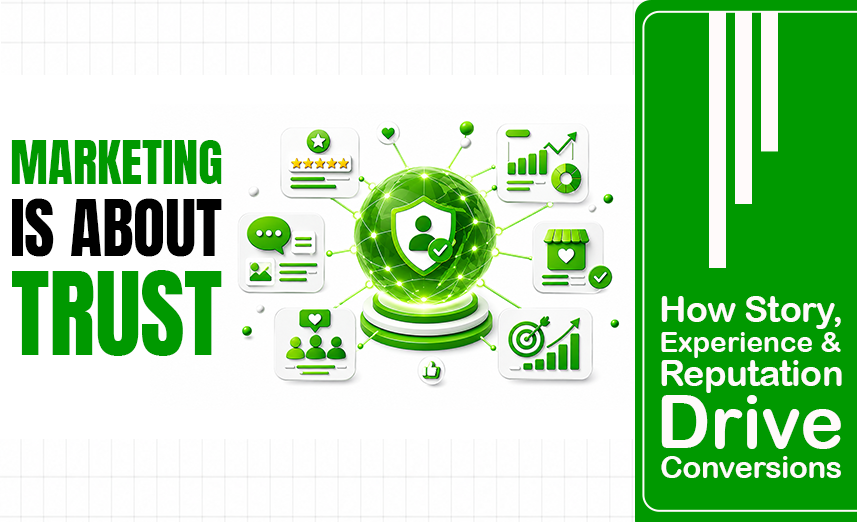
Getting attention is no longer the hard part. Earning belief is. I have seen campaigns pull in traffic, impressions, and even strong click-through rates, yet still underperform where it mattered most. In almost every case, the issue was not reached. It was confidence. People found the brand, explored the offer, and still held back because something felt uncertain. That is why trust in marketing matters so much. Buyers are not only asking whether your offer looks useful. They are asking whether your brand feels reliable, credible, and worth the risk.
That hesitation is not just something marketers notice in dashboards. It shows up in real behavior. Average cart abandonment still sits at 70.19%, and 19% of shoppers say they abandon because they do not trust a site with their payment information. A latest consumer review survey also found that 93% of consumers have purchased after reading reviews. In simple words, people usually look for reassurance before they commit. Trust is not a branding bonus. It is built directly into the buying process.
That is the lens I use when I look at what actually makes marketing convert. Story helps people connect. Experience helps them feel safe moving forward. Reputation proves your promise survives contact with reality. Put those pieces together, and trust in marketing stops sounding vague or soft. It becomes the force that helps more clicks turn into better conversions, stronger retention, and fewer moments where a promising customer disappears right before the decision.
Why Trust Is the Foundation of Modern Marketing
I have learned that people do not convert the moment they understand an offer. They convert when they believe it will deliver. That belief is where trust in marketing starts doing real work. Buyers measure risk before they click, submit, or buy, and the brands that reduce uncertainty fastest usually win without having to shout. That is why brand credibility factors matter so much, from proof and clarity to responsiveness and consistency. Strong confidence also speeds decisions because conversion psychology is brutally simple: when doubt shrinks, momentum grows.
PwC found that 52% of consumers stopped buying from a brand after a bad product or service experience, while 29% stopped because of poor customer experience online or in person. I keep coming back to that because it explains so many underperforming campaigns. What looks like a lead problem is often a trust problem wearing a different label. A page that feels believable shortens comparison time, reduces hesitation, and makes every touchpoint work harder, whether the visit came from search, paid media, social, or referral.
Why this matters
- Trust lowers perceived risk, making buyers feel safer about outcomes, promises, payments, and follow-through.
- High confidence shortens research cycles, reduces objections, and moves prospects toward action faster.
- Low trust leads to hesitation, more comparison shopping, weaker engagement, and more abandoned sessions.
- Clear proof, consistent messaging, and friction-free journeys turn credibility into measurable conversion momentum.
That is why I do not see a trust-based marketing mindset strategy as a soft brand layer. I see it as a conversion system. When buyers feel reassured, they move with less resistance, need fewer reminders, and second-guess less often. When trust is weak, even a strong offer gets dragged into endless comparison mode. The real goal is not to look impressive for five seconds. It is to make the next decision feel safe, obvious, and worth taking.
The Role of Storytelling in Building Trust
I have noticed that facts may help people understand a business, but stories help them remember why it matters. That difference is what makes brand storytelling for conversions so effective: attention is easy to win, but belief is harder to earn. A sharp narrative creates recognition, and recognition creates emotional closeness without sounding manipulative. That is the real strength of an emotional marketing strategy when it is handled with restraint: it helps the audience feel seen, not cornered. Stories matter because they give claims a human shape.
When I write or review trust-led content, I usually fall back on a simple storytelling marketing framework built around problem, pressure, decision, outcome, and lesson. I have found that this structure keeps the message grounded in human stakes rather than letting it drift into polished but forgettable brand theater. When a brand can show what changed, why it mattered, and how the result was earned, the message feels more believable. It also feels easier to remember, which matters when competitors are all making similar promises in slightly different language.
What this looks like in practice
- Stories humanize brands, making abstract claims feel relevant, memorable, and easier to trust.
- Authentic narratives outperform generic slogans because real context and outcomes feel earned.
- Consistent storytelling across channels strengthens recognition and prevents fragmented brand perception.
- Well-shaped stories move buyers emotionally while still giving them practical reasons to believe.
I do not think strong stories need drama to convert. They need honesty, shape, and consistency. That is why brand storytelling for conversions works best when the same promise shows up across pages, ads, emails, and sales conversations. When the narrative feels aligned, buyers remember the brand and trust what it stands for. When the story changes tone every few clicks, confidence slips. Good storytelling is not decoration. It is credibility delivered in language people can actually feel.
User Experience as a Trust Signal
I have worked on pages where the copy was solid, the offer was strong, and the targeting was right, but conversions still lagged because the experience felt harder than it should. That is why I treat user experience as one of the fastest ways to build customer trust online. Design is not just decoration here. It is a credibility test happening in real time. When a page looks clean, loads quickly, and guides people without friction, the brand feels more capable. When it feels messy, slow, or confusing, confidence starts leaking before the message even has a chance to work.
This is where customer experience optimization becomes a conversion lever rather than a design-side hobby. Think with Google reported that the bounce rate rises by 123% when page load time moves from 1 second to 10 seconds. Google has also reported that 53% of mobile users leave a page that takes longer than three seconds to load. I have seen that pattern play out repeatedly: users do not neatly separate usability from trust the way marketers do. Every extra second, broken layout, or unclear path chips away at customer journey trust, especially for first-time visitors who have no reason to be patient.
What strengthens confidence?
- Fast load times reduce frustration and stop doubt from building before the message lands.
- Clean layouts make brands feel more credible, modern, and easier to trust at first glance.
- Clear navigation helps users find proof, contact details, and answers without extra effort.
- Friction-free journeys make the next step feel safe instead of awkward or risky.
So when I want to improve trust in marketing, I start with the experience people feel, not the claims they read. Make the proof easy to find. Remove clutter from the path to action. Simplify navigation until people can find answers in seconds. A smoother experience does more than improve usability. It quietly tells buyers your business is organized, dependable, and ready to deliver what it promises. Bad UX does the opposite. It asks for confidence before earning it.
Reputation & Social Proof Influence
I have seen brands spend heavily on traffic while ignoring the one thing prospects often check before taking them seriously: what other people are saying. A brand saying “trust us” is rarely persuasive. Other people saying it for you is where belief gets real. That is why a reputation marketing strategy matters so much when buyers are comparing promises they cannot fully verify on their own. Reviews, ratings, testimonials, and case studies work because they provide external confirmation instead of self-written praise. This is also where social proof marketing becomes practical rather than trendy.
In trust-led decisions, reputation becomes the public record of whether your promise survives contact with reality. I have found that when proof is consistently monitored, answered, and refreshed, online reputation management stops being damage control and becomes conversion support before a prospect ever speaks to sales. A good review profile does not just make a brand look nice. It makes the decision feel less risky, which is a much more valuable job.
What builds confidence?
- Reviews validate claims quickly, giving hesitant buyers outside confirmation before they commit.
- Case studies add depth by showing context, evidence, outcomes, and the reasoning behind results.
- Fresh testimonials increase confidence because buyers trust recent experiences more than old praise.
- Consistent review responses signal accountability, empathy, and operational maturity before direct contact.
BrightLocal’s latest survey found that 85% of consumers are more likely to use a business after positive reviews, while 77% are less likely to do so after negative ones. It also found that 47% will not use a business with fewer than 20 reviews, and 74% only care about reviews from the last three months. I think that explains why stale proof so often underperforms. Current proof feels alive, believable, and relevant, which is why trust in marketing often rises or falls on what other people have already said about you.
Trust Signals That Drive Conversions
I have noticed that conversions often hinge on small moments of reassurance rather than a single persuasive line. That is why a trust signals website should never treat credibility cues like decoration. Security badges, contact details, guarantees, certifications, and policy clarity work because they answer questions people may never bother to ask aloud. Together, these user trust signals tell visitors the business is real, reachable, and accountable after the click. If you want to build customer trust online, those details often matter most right before commitment, when hesitation peaks and buyers start scanning for one last reason to leave.
Here is what that looks like in practice:
| Trust signal | What the user feels | Likely effect on conversion |
|---|---|---|
| Security badge or secure checkout cue | “My payment details are protected here, so this purchase feels safer and more credible.” | Reduces checkout anxiety, lowers abandonment risk, and helps hesitant users complete the transaction with confidence. |
| Clear refund or service policy | “I understand what happens if something goes wrong, so the decision feels less risky.” | Reduces hesitation before purchase by removing uncertainty around refunds, expectations, and post-purchase reassurance. |
| Visible phone, email, or address | “This is a real business I can contact if I need help or reassurance.” | Increases legitimacy, lowers perceived risk, and encourages users to move forward with stronger confidence. |
| Current reviews or testimonials | “Other people recently had real experiences here, which makes this brand feel more trustworthy.” | Builds trust before form fills or purchases by validating claims with fresh, believable social proof. |
What moves the needle?
- Security cues reduce payment anxiety and reassure users that their information is handled responsibly.
- Transparent policies remove ambiguity around privacy, refunds, service expectations, and next steps.
- Visible contact details make the business feel legitimate, accountable, and much harder to doubt.
- Trust cues work best near decisions, where reassurance can immediately stop hesitation.
The best trust signals website is not the one with the most badges. It is the one that removes uncertainty efficiently. That is where a good trust-based marketing strategy becomes practical. I always look for whether safety is obvious, policies are understandable, and contact options are visible when users need reassurance most. Baymard’s research shows that 19% of shoppers abandon because they do not trust the site with their payment information, which is exactly why these details support trust-driven conversions rather than treating them like optional extras.
Conclusion: Trust Is the Real Conversion Engine
The more I work on websites, campaigns, and conversion-focused content, the more one pattern keeps proving itself: people do not buy when they are merely interested. They buy when they feel confident. That is why trust deserves a central place in modern marketing strategy. Story gives your brand a human voice. User experience makes that voice feel reliable in action. Reputation adds outside validation that buyers can believe before they ever speak to your team. And visible trust signals remove hesitation at the exact moment a decision is about to happen.
Taken together, these are not soft branding elements. They are practical conversion drivers. They reduce perceived risk, shorten comparison cycles, improve decision confidence, and create stronger long-term loyalty after the first conversion happens. In other words, trust does not just help marketing feel better. It helps marketing perform better.
Turn Trust Into Your Strongest Conversion Advantage
If your brand is getting attention but not enough action, the gap may not be visibility. It may be trust. At eSign Web Services, Ashwini Kumar Sharma helps businesses strengthen story, user experience, credibility, and conversion paths so trust becomes measurable growth. If you want a website and marketing system that feels more believable and converts with less friction, request a Conversion & Trust Audit today.
Frequently Asked Questions (FAQS)
Question: Why is trust more important than price in marketing?
Answer: Trust is often more important than price because it reduces perceived risk during decision-making. Customers are willing to pay higher prices when they feel confident about product quality, service reliability, and brand credibility. Low prices may attract attention but do not guarantee conversion if trust is lacking. Buyers prioritize assurance that their expectations will be met. Strong trust signals such as reviews, testimonials, and consistent communication increase willingness to invest. Building trust creates long-term relationships and repeat customers, while competing solely on price often leads to lower margins and reduced brand value.
Question: How does storytelling improve marketing conversions?
Answer: Storytelling improves conversions by creating emotional connections between the brand and the audience. Instead of presenting facts alone, stories make information relatable and memorable. They help users understand real experiences, challenges, and outcomes, making the brand more human and trustworthy. Emotional engagement increases attention, retention, and decision confidence. When users connect with a story, they are more likely to trust the message and take action. Effective storytelling also differentiates a brand from competitors by highlighting unique perspectives and values. This approach strengthens credibility and supports higher conversion rates across various marketing channels.
Question: What are the most effective trust signals on a website?
Answer: Effective trust signals include customer reviews, testimonials, case studies, security badges, certifications, and transparent business information. These elements reassure users about credibility and reliability. Displaying real customer feedback helps validate claims, while visible contact details and clear policies reduce uncertainty. Professional design and consistent branding also contribute to trust perception. Including logos of clients or partners strengthens authority. Trust signals should be strategically placed near calls-to-action to reinforce confidence at decision points. Combining multiple signals creates a stronger impression and increases the likelihood of conversion.
Question: Can poor user experience damage brand trust?
Answer: Yes, poor user experience can significantly damage brand trust. Slow loading times, confusing navigation, broken links, or unresponsive design create frustration and reduce credibility. Users often associate website quality with business reliability. If the experience feels unprofessional or difficult, they may question the brand’s ability to deliver promised results. Negative experiences increase bounce rates and reduce engagement. Improving usability, performance, and clarity helps restore confidence. A seamless user experience signals professionalism and strengthens trust, making users more comfortable proceeding with conversions or further interaction.
Question: How do online reviews impact customer decisions?
Answer: Online reviews influence customer decisions by providing social proof and reducing uncertainty. Potential buyers often rely on the experiences of others to evaluate credibility and quality. Positive reviews increase confidence, while negative reviews can raise concerns. The volume, consistency, and authenticity of reviews also matter. Responding to reviews demonstrates transparency and customer care, further strengthening trust. Reviews act as independent validation, making them more persuasive than brand-generated messaging. Managing online reputation actively ensures that customer feedback supports business growth and conversion performance.
Question: What role does consistency play in building trust?
Answer: Consistency ensures that users receive the same message, tone, and experience across all touchpoints. When branding, communication, and service delivery align, it reinforces reliability and professionalism. Inconsistent messaging or design can create confusion and reduce confidence. Maintaining consistency across websites, ads, social media, and customer interactions strengthens recognition and credibility. It helps users form clear expectations about the brand. Consistency also supports long-term relationships by demonstrating stability and dependability. Businesses that maintain uniform experiences are more likely to build trust and retain customers over time.
Question: How can businesses rebuild trust after negative feedback?
Answer: Rebuilding trust requires transparency, accountability, and proactive action. Acknowledging issues openly shows responsibility and respect for customer concerns. Providing clear solutions and timely responses demonstrates commitment to improvement. Consistent follow-up ensures that problems are resolved effectively. Businesses should also analyze feedback to identify patterns and prevent recurrence. Positive actions, such as improving service quality or updating processes, reinforce credibility. Communicating improvements publicly helps restore confidence. Over time, consistent positive experiences can outweigh past negative perceptions and rebuild trust.
Question: Is trust equally important for B2B and B2C marketing?
Answer: Trust is critical in both B2B and B2C marketing, though it manifests differently. In B2B, trust is built through expertise, case studies, long-term relationships, and consistent performance. Decision-making often involves multiple stakeholders and longer sales cycles. In B2C, trust relies more on emotional connection, user experience, and social proof. Both contexts require credibility, transparency, and reliability. Regardless of audience type, trust influences decision confidence and reduces perceived risk. Businesses that prioritize trust achieve stronger engagement, higher conversion rates, and sustained growth across both segments.
Question: How does brand reputation influence long-term growth?
Answer: Brand reputation directly impacts customer acquisition, retention, and referral potential. A strong reputation builds credibility, making it easier to attract new customers. Positive perception reduces marketing effort required to convince prospects. It also encourages repeat business and word-of-mouth recommendations. Conversely, a poor reputation increases resistance and reduces conversion rates. Managing reputation through consistent service, transparent communication, and positive experiences supports sustainable growth. Businesses with strong reputations gain competitive advantages and maintain long-term market presence.
Question: Can trust-driven marketing reduce advertising costs?
Answer: Yes, trust-driven marketing can reduce advertising costs by improving conversion efficiency and customer retention. When users trust a brand, they are more likely to convert without requiring repeated exposure or aggressive promotion. Higher trust increases click-through rates, engagement, and conversion rates, reducing cost per acquisition. It also strengthens organic growth through referrals and repeat purchases. Building trust minimizes reliance on constant advertising spend. Over time, this approach creates a more sustainable and cost-effective marketing model focused on long-term value rather than short-term visibility.